Machine Learning-Based Sentiment Analysis of User-Generated Content: Insights from Google Maps Reviews
DOI:
https://doi.org/10.58982/cp9nwn24Keywords:
Google Maps Reviews; Sentiment Analysis; Random Forest; Customer Experience Analytics; Machine LearningAbstract
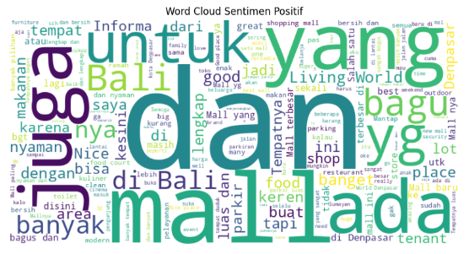
The rapid growth of user-generated content on digital platforms has provided valuable opportunities for understanding customer perceptions through sentiment analysis. Google Maps, as one of the most widely used location-based services, allows visitors to share their experiences and opinions regarding public facilities and commercial destinations. This study aims to analyze visitor sentiment toward Living World Bali using machine learning techniques. A total of 4,060 Google Maps reviews were collected and processed through several text preprocessing stages, including cleaning, case folding, normalization, tokenization, stopword removal, and stemming. The Term Frequency–Inverse Document Frequency (TF-IDF) method was employed for feature extraction, while the Random Forest algorithm was utilized for sentiment classification. Experimental results indicate that the proposed model achieved an accuracy of 91.75%, precision of 92.39%, recall of 98.84%, and an F1-score of 95.55%. The sentiment distribution analysis revealed that positive sentiment dominated the dataset, accounting for 84.70% of all reviews, suggesting a high level of customer satisfaction with Living World Bali. Furthermore, the findings demonstrate that the integration of TF-IDF and Random Forest provides an effective approach for classifying textual reviews in the tourism and retail domains. The proposed framework offers valuable insights for shopping center management in evaluating customer experiences and supporting data-driven decision-making processes to improve service quality and visitor satisfaction.
References
[1] J. Ipmawati, S. Saifulloh, and K. Kusnawi, “Sentiment Analysis of Tourist Attractions Based on Reviews on Google Maps Using the Support Vector Machine Algorithm: Sentiment Analysis of Tourist Attractions Based on Reviews on Google Maps Using the Support Vector Machine Algorithm Support Vector Machine A,”MALCOM Indonesia. J. Mach. Learn. Comput. Sci., vol. 4, no. 1, pp. 247–256, 2024.
[2] Pandu Rizki Maulidiah, Amalia Anjani Arifiyanti, and Dhian Satria Yudha Kartika, "Sentiment Analysis of Visitor Reviews of Walisongo Religious Tourism Sites Using the Supervised Learning Method,"J. Ilm. Tech. Inform. and Commun., vol. 3, no. 3, pp. 57–64, 2023, doi: 10.55606/juitik.v3i3.617.
[3] FW Atmojo, V. Atina, and H. Permatasari, “Customer Sentiment Analysis on Google Maps Reviews of Al-Ghiff Steak Restaurant Using the Indobert Model,”Simtek J. Sist. Inf. and Tech. Comput., vol. 10, no. 2, pp. 336–343, 2025, doi: 10.51876/simtek.v10i2.1602.
[4] S. Khairunnisa, A. Adiwijaya, and S. Al Faraby, “The Effect of Text Preprocessing on Sentiment Analysis of Public Comments on Twitter Social Media (COVID-19 Pandemic Case Study),”J. Media Inform. Budidarma, vol. 5, no. 2, p. 406, 2021, doi: 10.30865/mib.v5i2.2835.
[5] T. Husnul Khotimah, Nilam Novita Sari, Khaola Rachma Adzima, and Leny Dhianti Haeruman, “Topic Modeling in Sentiment Analysis of Numeracy Literacy Education in Indonesia Using Latent Dirichlet Allocation,”J. Ris. Learning Mat. School., vol. 9, no. 2, pp. 9–20, 2025, doi: 10.21009/jrpms.092.02.
[6] D. Wijaya, RA Saputra, and F. Irwiensyah, “Sentiment Analysis of Reviews of the National Digital Samsat Application on Google Playstore Using the Naïve Bayes Algorithm,”CLICK Study. Science. Information. and Computer., vol. 4, no. 4, pp. 2369–2380, 2024.
[7] S. Mawaddah, A. Naswin, and S. Sulkifli, “Emotional Landscape Mapping on Twitter: Visualizing Neutral, Positive, and Negative Sentiments with Word Cloud,”RIGGS J. Artif. Intel. Digits. Bus., vol. 4, no. 4, pp. 1276–1285, 2025, doi: 10.31004/riggs.v4i4.3650.
[8] D. Gavalas, C. Konstantopoulos, K. Mastakas, and G. Pantziou, “Monitoring Travel-Related Information on Social Media through Sentiment Analysis,” in Proc. IEEE/ACM 7th Int. Conf. Utility and Cloud Computing (UCC), 2014, pp. 1063–1070. doi: 10.1109/UCC.2014.102.
[9] G. Madapathi and B. Kaur, “Sentiment Analysis and Classification of Tourist Place Reviews Using Machine Learning,” in Proc. IEEE UPWIECON, 2025, pp. 732–738. doi: 10.1109/UPWIECON67212.2025.11390431.
[10] I. D. Khairan Marzuki, L. G. R. Putra, H. Hairani, et al., “Performance Improvement of the Random Forest Method Based on SMOTE-Tomek Link on Lombok Tourism Analysis Sentiment,” Jurnal Bumigora Information Technology, vol. 5, no. 2, pp. 1–10, 2023. doi: 10.30812/bite.v5i2.3166.
Downloads
Published
Issue
Section
License
Copyright (c) 2026 Ayu Gde Chrisna Udayanie, I Wayan Adi Sparta, Putu Eka Parianthana, Ni Putu Dea Sillviari

This work is licensed under a Creative Commons Attribution-NonCommercial-ShareAlike 4.0 International License.